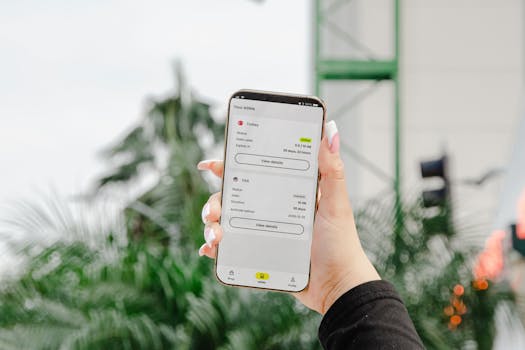
Living in a big city can be chaotic, but smart city initiatives are already changing everything, bringing concrete solutions to common day-to-day problems.
Population growth in urban areas demands creativity, technology, and efficiency to ensure a better quality of life — and smart cities fulfill this role.
Explore, in this article, direct actions and practical examples of smart cities that transform routines, optimize resources, and connect people to new opportunities.
Practical advancements that smart cities offer for everyday life.
Residents notice direct transformations when their cities adopt the philosophy of smart cities, which apply technology and data to facilitate everyone's daily lives.
For example, using municipal apps to report burned-out streetlights or to track public transportation is part of a more agile and efficient daily routine.
Connected transportation systems are changing the urban experience.
Smart platforms integrate buses, subways, and bike paths, allowing citizens to plan routes, schedules, and alternatives in real time and avoid unnecessary delays.
Many residents of São Paulo say: "The city app lets me know the exact bus schedule. I no longer have to wait in the dark."
Furthermore, smart cities invest in adaptive traffic lights. They prioritize traffic flow where there is heavy traffic or ensure quick passage for ambulances.
Lighting and safety: direct impacts on perceived well-being.
Sensor-monitored lamps not only save energy, but also adapt to movement, increasing brightness where there is human traffic and reducing risks.
With smart cameras connected to the operations center, security teams act quickly, reinforcing protection at critical points in the municipality.
The perceived effect is immediate: brighter and more monitored neighborhoods generate tranquility and increase property values, improving social interaction and encouraging the use of public spaces.
| Applied technology | Immediate benefit | Real example | Citizen's next action |
|---|---|---|---|
| Smart traffic light | Traffic flows better. | Paulista Avenue, SP | Plan routes at off-peak times. |
| Surveillance camera | Reduces petty theft. | Downtown Rio de Janeiro | Report suspicious situations to the digital channel. |
| Light pole with sensor | Improves the feeling of security. | Belo Horizonte, MG | Walk along busy streets at night. |
| Digital ticket | Avoid queues | Salvador, Bahia | Purchase and recharge via the city's app. |
| Traffic panel | Accident alert | Curitiba, PR | Follow the recommendations for alternative routes provided. |
Accessible facilities created by smart cities organize tasks.
Routines become simpler when the city anticipates citizen needs, predicting traffic congestion, improving services, and resolving bureaucratic issues via mobile phone.
Residents learn which apps to use to access all the benefits provided by smart cities and improve the organization of their daily lives.
Administrative tasks handled via mobile phone.
Issuing duplicate bills, scheduling health appointments, or paying fines through the municipal platform makes life easier and avoids unnecessary travel.
Quickly find where to vote, access property tax information, or file documents in seconds, and avoid delays when resolving municipal bureaucratic issues from the palm of your hand.
- Download official apps for payments and scheduling, ensuring transaction security and taking advantage of features that provide information on the steps and deadlines of each procedure.
- Activate personalized notifications and reminders for healthcare services so you don't miss appointments or vaccinations, avoiding queues and improving your punctuality in the Brazilian public healthcare system (SUS).
- Generate digital proof of payment for property taxes and access to public transportation to avoid lost paper documents that complicate the worker's daily life.
- Request urban repairs directly through the app to expedite responses from the city hall, encouraging collaborative management with clear channels for reporting and real-time monitoring.
- Use online systems to register for daycare centers and public schools, track waiting lists, and receive notifications as soon as a spot becomes available in your area.
By following these steps, citizens of smart cities secure more time for leisure, studies, or work, reducing bureaucracy and enabling them to find solutions remotely.
Sustainable practices become part of the digital routine.
Separating waste, reusing rainwater, and adopting public transportation are actions encouraged by smart city apps that promote practical urban sustainability.
When there are reward programs and discounts for those who collect and separate waste correctly, residents feel motivated to participate in the campaigns every month.
- Find out about selective waste collection and drop-off points via the municipal platform to separate organic and recyclable waste, directly contributing to your city's sustainability goals.
- Install suggested energy and water consumption sensors in urban infrastructure apps, viewing weekly reports to easily adjust practices and save natural resources.
- Take advantage of tax incentives for non-polluting transportation, such as bike-sharing programs, and use digital maps to plan safe and quick routes to school or work.
- Utilize virtual waste banks to exchange recyclable materials for points that can be accumulated or discounts on public fees, strengthening the local circular economy and preventing waste.
- Participate in digital community clean-up efforts organized by smart neighborhoods and promote environmental education events by inviting friends through the app and tracking your group's collective score.
By implementing these actions, the routine becomes more sustainable, economical, and aligned with the best practices recommended by smart cities.
New mobility habits inspired by technological integration.
People adapt their mode of transportation when smart cities offer practical alternatives, reducing car use and improving the flow of public transport.
Automated route planning multiplies the options.
Apps suggest multimodal route options: "Today I'll take the subway halfway, then use a shared bike to save time and avoid heavy traffic."
Digital panels on the streets provide real-time traffic alerts. With this information, drivers can decide to change their route before getting stuck in traffic jams.
This change in planning transforms the behavior of residents, who feel like active participants in smart cities, exchanging tips in groups and social networks about the best routes.
Digital free pass: a detail that expands access.
Mobile-integrated transport tickets eliminate queues, speed up boarding, and offer reduced fares for students, seniors, and people with disabilities.
Field agents place recharge kiosks in markets and stations; users share their experiences: "I filled up my digital card on the app, I didn't even need to leave home."
In these scenarios, smart cities reduce the stress of transportation and increase free time, bringing more leisure and quality of life to their residents.
Constant updates: smart cities evolve by listening to citizens.
Experience shows that improvements never stop: smart cities evolve with the active participation of the population, who suggest updates and monitor the changes.
Neighborhood groups suggest adjustments or propose new digital solutions, demonstrating the impact of direct contact between users and municipal management based on data and real feedback.
Participatory tools enhance engagement.
Digital forums and public consultations provide a space for residents to report challenges, approve new policies, and test prototypes without leaving home.
Each interaction generates statistics and reports for the municipal government, helping to prioritize future projects and investments.
Those who participate in these conversations see concrete changes quickly, such as the installation of new lighting points or improvements in local recycling programs.
Public monitoring creates collective commitment.
Interactive panels in public squares and buildings display achieved environmental goals or safety data, like a large city performance scoreboard.
If the public notices accumulated garbage or a drop in the displayed safety index, engagement increases and failures are reported via dedicated applications.
This direct control brings citizens closer to management, making each resident a co-author of smart cities.
Education, health, and inclusion advance with accessible technology.
Children, adults, and the elderly gain new learning opportunities and access to medical care when smart cities use digital platforms to democratize essential services.
Partnerships between schools, universities, and municipal systems ensure connected equipment, live-streamed classes, and vaccine scheduling with just a few clicks.
Online appointment scheduling transforms the Brazilian public healthcare system (SUS).
Digitized healthcare systems allow residents to choose appointment times, receive appointment reminders via SMS, and view their complete medical history in seconds.
People report: “I never again spent hours in line. I booked my son's appointment online and confirmed it quickly.”
At the time of service, all medical records are available, making monitoring safer, more accurate, and more efficient for those who depend on public services.
Distance learning becomes an accessible standard for all.
Recorded classes and online learning materials allow students to review content at the time and place that suits them best, respecting different learning paces.
Teachers interact in forums, answer questions, and correct assignments virtually, ensuring that no one is left without an answer due to distance or lack of transportation.
These models strengthen inclusion, enabling rural or low-income populations to participate in the same curriculum as those in capital cities.
Digital inclusion connects solutions and gives a voice to everyone in smart cities.
Providing access to basic technology — from public Wi-Fi to free computer courses — eliminates historical barriers and highlights the true potential of smart cities.
People who were previously digitally excluded are now contributing, proposing improvements, and accessing services autonomously, transforming the urban network in real time.
Community Wi-Fi hotspots increase social participation.
Squares and bus terminals with free internet access have become hubs for meetings, job searches, access to education, and direct contact with municipal agencies.
Young people learn programming in free workshops, and parents research health channels or report urban incidents in less time, with the support of local monitors.
In these places, technology serves as a bridge between different groups, strengthening ties and breaking down old prejudices about the digital world.
Digital skills training initiatives are changing adult lives.
Computer courses, entrepreneurship workshops, and digital citizenship workshops take place in libraries, schools, or mobile tents, reaching the entire community.
This opens doors for micro-entrepreneurs, who digitize their businesses and increase online sales, as well as for seniors who make video calls to family or seek reliable medical information.
This progress reduces inequalities and brings each neighborhood closer to the high opportunities offered by smart cities.
Sustainable legacy: smart cities generate lasting impact.
Every digital improvement translates into gains for future generations, building smart cities that are more resilient, fair, and environmentally conscious of themselves and their inhabitants.
City officials are expanding green spaces, investing in low-carbon mobility, and rewarding community initiatives that reduce pollutant emissions on streets and in municipal parks.
- Mayors are creating calls for proposals for green startups to implement solutions in waste collection and recycling, establishing partnerships between the public and private sectors and civil society to generate local jobs.
- Residents participate in air quality monitoring groups and report problems via apps, influencing quick decisions about truck circulation and vehicle restrictions.
- Smart neighborhoods cultivate collective urban gardens, promoting food education, utilizing unused spaces, and collecting organic waste for community-based natural fertilizer.
- Environmental sensors installed in public squares provide information on humidity, temperature, and solar index, facilitating the organization of events, sports activities, and planting in the community.
- Intergenerational projects connect children, young people, and the elderly to exchange experiences, encouraging coexistence, solidarity, and active citizenship in the use of urban technologies.
With each innovation cycle, smart cities leave a tangible legacy: greater social inclusion, orderly growth, and the ability to adapt to emerging challenges.
Transform your urban experience with small actions inspired by smart cities.
Throughout this article, it has become clear how smart cities positively impact urban life, bringing accessibility, security, and convenience to all residents.
The ability to apply technology to everyday tasks, promote active participation, and invest in sustainability highlights the growing relevance of smart cities in Brazil.
Every citizen can adopt simple practices: get closer to the apps and initiatives in your municipality, collaborate, participate, and observe how small actions build a much better urban future.