Have you ever felt the urge to use technology to improve your health? You're not alone. Thousands are starting to experiment with fitness tracking, seeking more control over their habits and daily well-being.
Putting personal health under a technological microscope allows us to see hidden patterns in our daily lives. This makes more assertive decisions, such as swapping the couch for a walk, much easier to make.
In this article, you will discover how fitness tracking technologies are reinventing your relationship with your health, providing practical examples and surefire tips to put into practice right away.
Demystifying fitness trackers: benefits beyond the basics
Choosing a fitness tracker changes your perception of your body. By measuring steps, calories, and sleep patterns, technological solutions make wellness accessible to everyone.
Beyond the basics, fitness tracking provides weekly comparisons, automatically adjusted goals, and personalized challenges, transforming health into a measurable objective.
Understanding the types: bracelets, watches, and mobile apps
Smart bracelets are popular because they are lightweight, discreet, and focus on everyday fitness tracking, offering step counting, sedentary alerts, and sleep analysis.
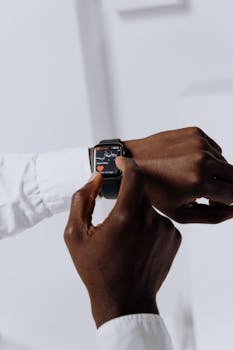
Smartwatches offer features such as continuous heart rate monitoring, accurate GPS for outdoor exercise, and direct integration with health apps on your smartphone.
Mobile apps transform any cell phone into a fitness tracking center, analyzing walks, runs, and allowing manual logging of meals and daily hydration.
Data integration: comparative analysis for real progress.
By syncing different devices, fitness tracking offers a broad overview, allowing you to monitor weekly progress with clear graphs and statistics, making adjustments easier in real time.
This cross-referencing of data results in useful insights. For example, someone might notice they sleep less on days with little exercise, prompting them to make small changes to improve their sleep and energy levels.
Over the weekend, while reviewing the app, you realize you walked more each weekday than on your days off. On Monday, you change your route to include an extra walk.
| Device Type | Main Functions | Recommended For | Next Recommended Action |
|---|---|---|---|
| Fitness bracelet | Steps, calories, sleep | Beginners, easy routine | Activate motion reminder |
| Smartwatch | Heart rate monitor, GPS, apps | Varied exercises | Test dynamic exercise mode |
| Application | Manual and automatic records | All age groups | Sync with other devices |
| Heart rate sensor | Specific monitoring | Those who train intensely | Set up limit alerts. |
| Smart scale | Weight, fat, muscle mass | Detailed follow-up | Analyze monthly trends. |
Personalizing your routine with smart fitness tracking
Setting tangible goals with fitness tracking helps you decide where to adjust habits, such as reducing sedentary behavior or including short walks during your work break.
By understanding your records, you can customize automatic alerts and recommendations. This transforms digital feedback into a practical routine that impacts different realities.
Setting realistic goals and monitoring daily progress.
Start by establishing daily steps that align with your profile. View the goal as an achievable incentive, not a rigid requirement.
Track your progress using fitness tracking, celebrating small achievements. This strengthens the habit and motivates adjustments when necessary.
If you didn't reach your goal in a busy day, quickly analyze your data. The next day, try to include new opportunities to move forward naturally.
- Add reminders to walk every 60 minutes – this reduces the time you spend standing still and can be easily adjusted through the app.
- Set alarms for regular hydration, using fitness tracking as an ally to remember to drink enough water even on busy days.
- Include gradual sleep goals, adjusting by 10 minutes earlier each week until you reach an ideal pattern that truly fits into your routine.
- Register your favorite types of exercises to receive relevant and motivating suggestions, making fitness tracking more interactive.
- Activate weekly analysis to review performance and correct gaps, leveraging automated reports as a source of continuous learning.
The secret lies not in competing, but in learning how to use fitness tracking to adjust habits that make sense for your current stage of life.
Transforming reports into concrete decisions.
When the device alerts you to missed goals, imagine: “I didn’t reach 8,000 steps today—tomorrow I’ll park further away and fix this before lunch.” A small decision improves the entire cycle.
If you notice peaks of sedentary behavior after long meetings, create a script: "Finished from the call? Get up, stretch, walk down the hallway for five minutes."
- Have you noticed a drop in energy levels? Schedule a post-lunch walk into your next fitness tracking plan.
- Did irregular sleep patterns appear on the chart? Set a fixed time to turn off screens before bed.
- Peak daily stress? Try pause notifications for mindful breathing.
- Have you noticed less consistent training sessions? Set up alerts with personalized motivational phrases.
- Data indicates dehydration? Decide to walk to a water fountain after every meeting.
Immediate feedback allows for adjustments to small actions that, when added together, significantly impact well-being over the weeks.
Monitoring sleep, diet, and heart rate metrics through fitness tracking.
Expand your perspective beyond the steps: fitness tracking measures sleep patterns, eating habits, and heart health, making daily improvements easier.
Getting enough sleep, eating right, and taking care of your heart are three pillars that apps and devices address with practical solutions.
Sleep patterns: guiding restful nights
Modern trackers suggest ideal bedtimes by analyzing rest and sleep phases. They report interruptions and suggest practical adjustments after data collection.
When you notice you're waking up tired, it's worth reviewing your fitness tracking charts: detecting fragmented nights can help regulate nighttime habits, such as avoiding caffeine at night.
Each week, try to move your bedtime forward by ten minutes. Small changes reveal measurable improvements in your sleep history statistics; adjust your routine as you progress.
Food journeys: aligning diet and health goals
Recording food, liquids, and meal times becomes simple using fitness tracking apps. This data helps avoid large gaps and allows you to compare actual versus desired intake.
After noticing nighttime hunger spikes, adjust your afternoon snacks to ensure sustained energy. Eliminate the "rushed lunch" from your diet and prioritize a light, balanced break.
Photograph dishes and record them using voice commands. The app itself suggests small, smart substitutions, such as swapping soda for sparkling water with lemon.
Pulse, blood pressure, and heart rate: from statistics to active protection.
Monitoring heart rate breaks down taboos about workout intensity and alerts you to potential overexertion. Fitness trackers personalize ranges and indicate whether you are at a safe pace for your profile.
If you receive a notification of an elevated heart rate without exertion, sit down, relax, record your symptoms, and share them with a professional. This provides reassurance without alarm and allows for quick action when necessary.
Instructions for the user: "Today, set an alert for your maximum heart rate – if it spikes, slow down and hydrate immediately."
Applying fitness tracking in different real-life scenarios
The usefulness of fitness tracking multiplies when recommendations are tailored to one's own lifestyle. It doesn't matter if you work from home or spend hours outdoors.
Teenagers, active adults, and seniors have different needs and goals, and fitness tracking can calibrate automatic suggestions for each profile.
Working from home: micro-habits and dynamic breaks
During remote work hours, set regular movement reminders. Getting up every hour, even just to stretch, reduces fatigue and improves focus.
With fitness tracking enabled, write down mini-goals: climb stairs between tasks, take 100 steps after long calls, or use your coffee break to walk for ten minutes.
At the end of the day, quickly review the data. If you accomplished 75% of your goals, reward yourself with a playlist or short series to relax before bed.
Adapted for seniors: safe use and simple instructions.
Configure features with support: request automatic data logging so family members can remotely monitor fitness tracking. This strengthens the care network without sacrificing autonomy.
Set reminders for medication and hydration times, integrating health and safety. Reinforce voice commands or an enlarged screen for ease of use, regardless of the user's level of technological familiarity.
Start with the basics: set reminders for light walking after lunch and some stretching in the afternoon. Small wins keep motivation high.
Overcoming resistance to technology: straightforward strategies for creating new habits.
Trying out fitness tracking challenges the natural resistance to new things. An adjusted routine makes the process lighter and even fun, even for those who never imagined themselves recording steps.
The first week tends to test your patience. By focusing on practical results rather than perfection, adopting technology becomes a natural step.
Minimizing barriers: a hassle-free first contact.
Start by acquiring a simple device. Activate the most basic fitness tracking functions, such as step counting and hydration reminders.
End each day with a brief review of the data – without judgment, just celebrating small milestones.
Suggest a deal: ten minutes of walking is worth a pleasant break, like a coffee or a quick read.
Connecting digital routines to offline life.
Take advantage of fitness tracking to align digital goals with your personal plan. For example, use the app's alert to schedule a family outing, not just to record goals.
The pace adapts: a progress report is a signal to suggest an outdoor activity on weekends.
Copy this practical script: "If I receive a message from someone who's sedentary, I go out to buy bread on foot instead of ordering delivery." The action becomes a habit, without being intimidating.
Distinguishing myths from truths about fitness tracking.
Cutting out noise and distorted information about fitness tracking is essential. Many believe that data accuracy is absolute, but true strength lies in habits, not obsession.
Comparing reports from fitness tracking with your subjective perceptions helps filter out exaggerations and appreciate real achievements without excessive anxiety.
- Don't expect perfect numbers: small fluctuations are part of the process and don't invalidate progress.
- Incorporate fitness tracking as a tool, not a daily obligation – use reports as allies, not as judges.
- Adapt your plans to the demands of the day and accept that goals need to be flexible to align with your reality.
- Don't compare yourself to other users: your progress is unique.
- Share what you've learned and what's new with friends; creating mutual support makes it easier to incorporate fitness tracking without pressure.
Commit to consistency, not perfection. In the long run, the benefits will be visible.
Summarizing the achievements of fitness tracking in personal health
Using fitness tracking today means embracing digital self-care, valuing small choices that, together, transform the health landscape over weeks and months.
Health is no longer a matter of luck, but the result of daily micro-actions guided by fitness tracking. By understanding real data, the path to improvement is straightforward and without mystery.
With each recorded achievement, your body thanks you. Keep adapting your habits, learning from your experiences, and using fitness tracking as an ally to maintain a practical and enjoyable balance in your life.